The CT Scanner Machine Guide stands as one of the most trans-formative tools in healthcare today. This sophisticated device delivers rapid, high-resolution cross-sectional images of internal structures, helping physicians detect conditions that traditional X-rays often miss. From emergency rooms to specialised clinics, the ct scanner machine enables faster diagnoses, better treatment planning, and improved patient outcomes worldwide.
What Is a CT Scanner Machine?
A ct scanner machine, also known as a computed tomography , combines X-ray technology with advanced computer processing. Unlike a standard X-ray that produces a single flat image, the machine rotates around the patient and captures hundreds of thin “slices.” Computers then stack these slices to create detailed 3D views of bones, soft tissues, blood vessels, and organs.
Medical professionals rely on this, its ability to reveal internal details with exceptional clarity. Hospitals and imaging centers use these systems daily because they provide non-invasive insights that guide critical decisions in trauma care, cancer detection, and chronic disease management.
How Does a CT Scanner Machine Work?
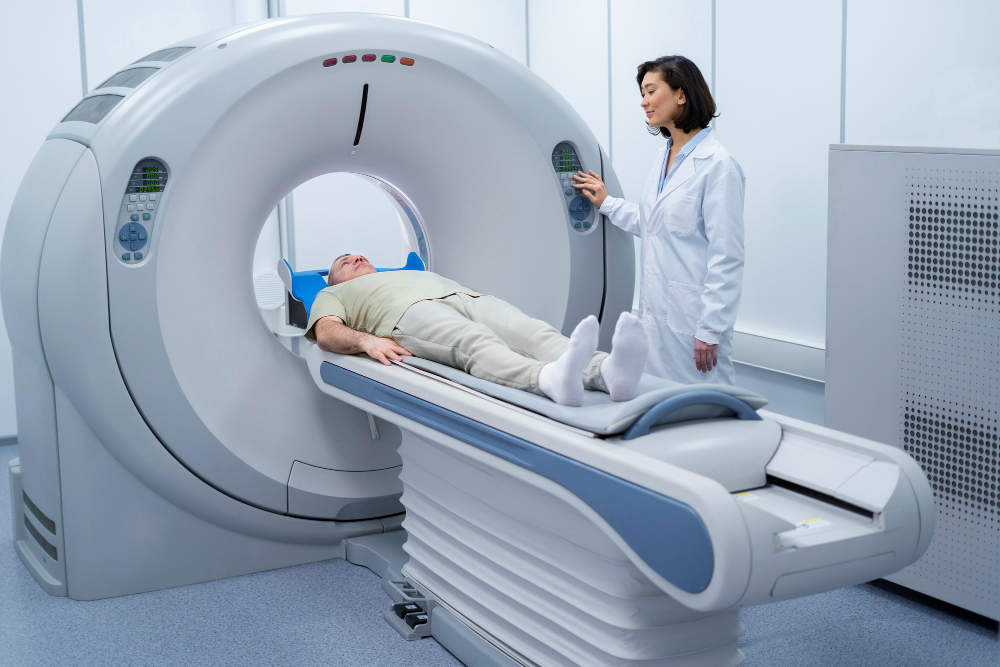
The ct scanner machine features a large, doughnut-shaped structure called a gantry. Inside this gantry, an X-ray tube rotates rapidly while the patient lies on a motorized table that slides through the center. As the tube spins, it emits narrow beams of X-rays that pass through the body from multiple angles. Detectors positioned opposite the tube capture the attenuated rays and send the data to a powerful computer.
The computer applies complex mathematical algorithms to reconstruct the raw data into clear cross-sectional images, typically 1–10 mm thick. Technologists can view these slices individually or combine them into rotatable 3D models. The entire process happens quickly—modern machines often complete a full-body scan in seconds—while the patient hears only a gentle whirring sound.
Key Components
- Gantry: Houses the rotating X-ray tube and detectors.
- Motorized Table: Moves the patient smoothly through the scanning tunnel.
- X-ray Detectors: Convert X-ray signals into digital data.
- Computer System: Processes information using tomographic reconstruction.
Types of CT Scanner Machines
Manufacturers design ct scanner machines with varying capabilities to meet diverse clinical needs. The primary classification depends on slice count, which indicates how many images the machine acquires per rotation.
Slice Count Classifications
- Single-Slice and Low-Slice (2–16 slices): These entry-level systems suit basic imaging in smaller facilities. They deliver reliable results for routine exams but scan more slowly than higher-slice models.
- Mid-Range (32–64 slices): Popular in busy hospitals, these machines excel at cardiac studies, CT angiography, and whole-body scans. Faster rotation times reduce motion artifacts and improve image sharpness.
- High-End (128+ slices): Premium systems provide ultra-fast scanning and exceptional detail for complex cases like coronary artery imaging or trauma assessment.
Other specialized types include helical (spiral) scanners that acquire data continuously as the table moves, dual-energy scanners that differentiate tissues more precisely, and mobile units that travel between locations.
Medical Uses and Benefits of the CT Scanner Machine
Doctors examine this for numerous reasons. The device excels at identifying tumors, blood clots, internal bleeding, fractures, infections, and vascular blockages. In emergency settings, it quickly evaluates head injuries, chest pain, or abdominal trauma. Cardiologists use it to assess heart function and arteries without invasive procedures.
Key benefits include:
- Speed and Accuracy: Scans finish in minutes and produce precise, multi-angle views.
- Non-Invasive Nature: Patients avoid surgery or exploratory procedures.
- Versatility: One machine images almost any body part.
- Improved Outcomes: Early detection of life-threatening conditions leads to timely interventions.
CT Scanner Machine Price and Purchasing Considerations
Investment in a machine varies widely based on model, features, and whether the unit is new or refurbished. Entry-level refurbished 16-slice systems typically range from $90,000 to $205,000, while new 64-slice models cost $500,000 to $700,000. High-end 128+ slice or photon-counting systems can exceed $1 million.
Factors influencing price include slice count, rotation speed, software packages, tube life, and service contracts. Facilities also weigh installation costs, radiation shielding requirements, and ongoing maintenance. Many providers choose refurbished machines from reputable brands like GE, Siemens, Philips, Canon, or Fujifilm to achieve excellent performance at lower upfront costs.
What to Expect During a CT Scan Procedure
Preparation is straightforward. Patients may need to remove metal objects and sometimes fast for a few hours. In some cases, technicians administer oral or intravenous contrast to highlight specific structures. During the exam, the patient lies still on the table while it glides through the gantry. The technologist monitors from an adjacent room and may instruct the patient to hold their breath briefly to prevent blurring.
The procedure feels painless and usually lasts 10–30 minutes. Afterward, most people resume normal activities immediately.
Risks and Safety of the CT Scanner Machine
Although the uses ionizing radiation, modern dose-reduction technologies keep exposure low. Radiologists follow strict protocols to use the minimum radiation necessary, especially for children and pregnant patients. Contrast agents rarely cause reactions, but staff screen patients carefully to avoid complications.
Overall, the diagnostic benefits far outweigh the minimal risks when scans are clinically justified.
Advancements in CT Scanner Technology
Recent innovations include photon-counting detectors that improve image quality while lowering radiation dose. Artificial intelligence now assists in image reconstruction, reduces noise, and even flags abnormalities automatically. These developments make the ct scanner machine safer, faster, and more precise than ever before.
Conclusion
The CT scanner machine remains an indispensable pillar of modern medicine. Its ability to deliver fast, detailed, and life-saving images continues to evolve with technology. Whether you manage a hospital, operate an imaging center, or simply want to understand this vital diagnostic tool, knowing the types, workings, benefits, and costs of the CT scanner machine empowers better decision-making and patient care. As innovations advance, this remarkable technology will keep improving health outcomes for millions worldwide.
Frequently Asked Questions (FAQs)
What is the main difference between a CT scanner machine and a regular X-ray?
A ct scanner machine rotates around the body to create hundreds of cross-sectional slices that form 3D images, while a standard X-ray produces only one flat view.
How long does a CT scan with the CT scanner machine take?
Most scans complete in 10–30 minutes, depending on the body area and whether contrast is used.
Is the radiation from a CT scanner machine dangerous?
Modern machines use low-dose protocols. The small risk is generally outweighed by the diagnostic benefits; doctors always balance necessity with safety.
How much does a ct scanner machine cost?
Prices range from $90,000 for basic refurbished models to over $1 million for advanced new systems. Factors like slice count and features determine the final price.
Can patients with metal implants undergo a CT scan?
Yes. Unlike MRI, the ct scanner machine safely accommodates most metallic implants and pacemakers.
What should I do to prepare for a ct scanner machine exam?
Follow instructions regarding fasting, clothing, and contrast. Remove jewelry and inform staff about allergies or kidney issues.
Are there alternatives to the ct scanner machine?
Ultrasound or MRI may work for some cases, but the ct scanner machine remains the preferred choice for speed and bone/vessel detail in emergencies.