The difference between climate and weather lies at the heart of how we understand our atmosphere every day. Many people use the two terms interchangeably, yet they describe entirely different aspects of the air around us. Weather changes hour by hour, while climate reveals long-term patterns that shape entire regions. This guide breaks down the key distinctions, offers real-world examples, and explains why the difference between climate and weather affects everything from daily plans to global policy.
What Is Weather?
Weather refers to the short-term state of the atmosphere at a specific place and time. Meteorologists track it over minutes, hours, days, or weeks. Key elements include temperature, humidity, precipitation, wind speed and direction, cloud cover, and air pressure.
You experience weather directly when you step outside. A sudden thunderstorm on a summer afternoon or a clear, crisp morning after overnight rain counts as weather. Forecasters use satellites, radars, and ground stations to predict these conditions with impressive accuracy for the next few days. However, beyond about ten days, predictions become far less reliable because countless variables interact chaotically.
Weather is highly variable. One day in Faisalabad might bring scorching heat above 40°C with dry winds, while the next delivers monsoon rains that flood streets. These rapid shifts define daily life and influence everything from agriculture to transportation.
What Is Climate?
Climate describes the average weather conditions in a particular region over a long period—typically 30 years or more. Scientists compile decades of data to identify typical patterns rather than isolated events. The World Meteorological Organization established this 30-year standard decades ago so researchers worldwide could compare data consistently.
When experts discuss climate, they examine averages and extremes for temperature, rainfall, humidity, and wind across seasons or years. For instance, the climate of Punjab features hot summers, a distinct monsoon season, and cooler winters. These patterns remain relatively stable even if individual days vary wildly.
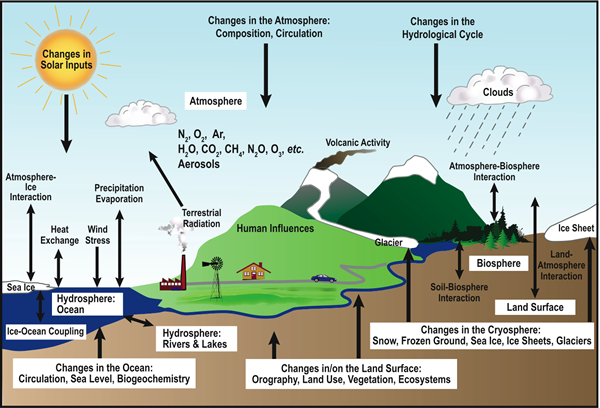
Climate also operates on larger scales. Scientists study regional climates (such as tropical, temperate, or arid) and even global climate systems influenced by ocean currents, solar radiation, and atmospheric composition. Unlike weather, climate changes slowly—often over decades or centuries—unless powerful forces like volcanic eruptions or human activities accelerate the process.
Key Differences Between Climate and Weather
The difference between climate and weather becomes crystal clear when you compare them side by side.
- Time Scale: Weather covers short periods (minutes to weeks). Climate spans 30+ years.
- Focus: Weather describes current, local conditions. Climate reveals long-term averages and trends for a region.
- Predictability: Forecasters deliver detailed weather predictions days ahead. Climate trends prove more predictable over decades because they average out daily chaos.
- Scope: Weather stays hyper-local—one city block might see rain while the next stays dry. Climate applies to broader areas, such as entire provinces or continents.
A popular analogy captures the difference between climate and weather perfectly: climate is what you expect, while weather is what you actually get. You pack clothes for a hot summer based on climate data, but you check the forecast each morning to decide whether to carry an umbrella.
Another helpful comparison comes from sports statistics. One baseball game represents weather (a single high-scoring or low-scoring affair). A player’s career batting average represents climate (the long-term performance pattern).
| Aspect | Weather | Climate |
|---|---|---|
| Timeframe | Minutes to weeks | 30 years or more |
| What it describes | Current atmospheric conditions | Long-term averages and patterns |
| Predictability | High for 1–7 days | Reliable trends over decades |
| Scale | Local and immediate | Regional or global |
| Example | Today’s 38°C and thunderstorms | Punjab’s average summer highs of 40°C |
Real-World Examples of the Difference Between Climate and Weather
Consider a heatwave in Europe. A few days of record-breaking temperatures count as extreme weather. If such heatwaves become more frequent and intense over 30 years, scientists identify a shift in climate.
In South Asia, the monsoon brings heavy rains each year. Daily downpours represent weather. The consistent timing, intensity, and duration of the entire monsoon season define the regional climate. A single unusually dry monsoon year does not change the climate, but a decades-long trend toward weaker monsoons signals climate change.
Coastal cities often illustrate the distinction dramatically. A single powerful storm surge is a weather event. Rising sea levels caused by melting ice sheets and warmer oceans represent a climate-driven threat that increases the frequency and severity of such surges.
Why Understanding the Difference Between Climate and Weather Matters
Grasping the difference between climate and weather helps individuals, businesses, and governments make smarter decisions. Farmers plant crops according to climate patterns but adjust irrigation based on daily weather forecasts. Urban planners design cities to withstand typical climate conditions while preparing emergency systems for extreme weather.
On a global scale, the distinction proves crucial for climate policy. Short-term weather fluctuations sometimes lead people to question long-term warming trends. Yet scientists emphasize that one cold winter does not disprove climate change any more than one hot day proves it. Reliable data over decades reveals the true picture.
Human activities now influence climate in measurable ways. Rising greenhouse gases alter long-term averages, which in turn make certain weather extremes more likely. Understanding this connection empowers communities to adapt and mitigate risks effectively.
Common Misconceptions About Climate and Weather
Many believe that a single unusual season proves climate change. In reality, natural variability still produces hot or cold spells within any climate system. Only sustained shifts over decades indicate genuine climate change.
Others assume climate never changes. Geological records show Earth’s climate has fluctuated dramatically over millennia, but current warming occurs at an unprecedented rate driven largely by human emissions.
Some confuse weather forecasts with climate projections. Forecasts predict specific events days ahead. Projections estimate future climate trends under different emission scenarios. Both tools remain valuable, yet they serve different purposes.
Frequently Asked Questions (FAQs)
What is the main difference between climate and weather? Weather describes short-term atmospheric conditions at a specific time and place, while climate represents the long-term average of those conditions over 30 years or more.
Can weather influence climate? Individual weather events do not change climate. However, persistent shifts in weather patterns over decades can signal or contribute to climate change.
How does climate change relate to weather? Climate change alters the baseline averages, making certain types of extreme weather—such as heatwaves, heavy rainfall, or droughts—more frequent or intense.
Is one hot summer proof of climate change? No. A single season reflects weather variability. Scientists look at multi-decade trends to confirm climate shifts.
Why do scientists use 30 years to define climate? The 30-year period, established by the World Meteorological Organization, smooths out natural year-to-year variations and provides a consistent global standard for comparison.
How can I use the difference between climate and weather in daily life? Check climate data when planning vacations, buying a home, or choosing crops. Use weather forecasts for immediate decisions like what to wear or whether to travel.
conclusion
In summary, the difference between climate and weather boils down to timescale and perspective. Weather tells today’s story, while climate reveals the bigger picture. By appreciating both, you gain clearer insight into the air we breathe, the seasons we experience, and the future we help shape. Whether you check the forecast each morning or study long-term trends, this fundamental distinction empowers smarter choices for yourself and the planet.