What Is Eyes on the Solar System?
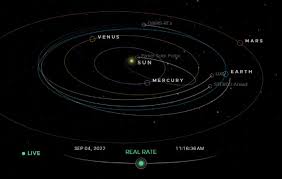
NASA developed Eyes on the Solar System as a browser-based visualization platform. It combines accurate mission data with stunning 3D graphics to show the entire solar system in motion. You control both space and time in this interactive experience.
The tool covers everything from the Sun and planets to distant comets and over 150 NASA spacecraft. It pulls real orbital data so every position stays scientifically precise. Users access it directly through any modern web browser—no downloads or special software required.
Key Features That Make Eyes on the Solar System Stand Out
This platform goes far beyond simple planet viewing. It creates an immersive environment where you actively participate in space exploration.
Real-Time 3D Visualization and Navigation
You zoom, pan, and fly around objects with simple mouse or touch controls. The interface displays planets, moons, asteroids, and spacecraft with realistic lighting and shadows. Layers let you toggle trails, orbits, labels, and icons for cleaner or more detailed views.
Natural lighting options show scenes exactly as they appear in space. You can highlight specific bodies or follow a spacecraft as it orbits a distant world.
Time Travel: From Past Missions to Future Launches
One of the most exciting aspects lets you rewind to 1950 or fast-forward to 2050. Watch Voyager 1 launch in 1977, follow Cassini’s Grand Finale at Saturn, or preview upcoming missions like Europa Clipper.
This feature turns history lessons into live experiences. You witness real events unfold at adjustable speeds and even ride along with probes during key moments such as flybys or landings.
Tracking NASA Spacecraft and Missions
Eyes on the Solar System tracks every major NASA mission in real time. You follow the Parker Solar Probe’s close approaches to the Sun, monitor Artemis missions near the Moon, or observe Juno circling
Detailed info panels pop up when you click any object. They include facts, mission timelines, and high-resolution imagery straight from NASA archives.
How to Get Started with Eyes on the Solar System
Getting started takes less than a minute. Open your browser and head to the official NASA site. The clean homepage welcomes you with a quick launch button.
Once inside, use the bottom toolbar to adjust time, speed, and destinations. The menu on the side offers quick jumps to planets, spacecraft, or featured events. Mobile users enjoy full touch support for smooth navigation on phones and tablets.
Beginners start with the default real-time view. Advanced users switch to custom timelines or focus on specific missions for deeper study.
Exploring Planets, Moons, and Beyond
You can visit every planet and major moon in detail. Fly close to Europa’s icy surface or compare Saturn’s rings from different angles. The tool even includes dwarf planets, asteroids like Bennu, and comets with their glowing tails.
Constellations appear in the background for added realism. Distance tools and size comparisons help you grasp the true scale of our solar system.
Educational Benefits for Students and Space Enthusiasts
Teachers love Eyes on the Solar System for classroom use. Students engage with real data while learning orbital mechanics, mission history, and planetary science. The interactive format keeps attention high and sparks curiosity about STEM careers.
Parents and hobbyists use it for family stargazing nights or personal research. It turns abstract concepts into visual stories that anyone can understand and enjoy.
Pro Tips to Get the Most Out of Eyes on the Solar System
- Adjust time speed wisely. Slow motion reveals intricate flybys while faster rates show long-term orbital changes.
- Use keyboard shortcuts. They speed up navigation once you learn the basics.
- Enable specific layers. Turn off labels temporarily for cleaner screenshots or videos.
- Bookmark favorite views. Save custom dates and camera positions for quick returns.
- Combine with other Eyes apps. Switch to Eyes on Earth or Eyes on Exoplanets for a complete NASA visualization experience.
These small tricks transform casual browsing into expert-level exploration.
Why Eyes on the Solar System Matters for Space Education Today
NASA continues updating the platform with fresh mission data. Recent additions include new spacecraft like Europa Clipper and upcoming events such as Artemis II. The free access removes barriers so anyone with internet can participate in cutting-edge space science.
This tool democratizes knowledge that once belonged only to mission control rooms. It inspires the next generation of explorers by making the solar system feel reachable.
conclusion
A Eyes on the Solar System transforms complex space science into an interactive, immersive experience that anyone can explore with ease. By combining real NASA data, detailed 3D visuals, and powerful time controls, it allows users to relive historic missions, track current spacecraft, and preview future explorations in a way that feels both educational and exciting. Whether used in classrooms, by space enthusiasts, or for casual discovery, the platform bridges the gap between science and imagination, making the vastness of our solar system more understandable and engaging. Ultimately, it stands as a powerful reminder that space exploration is not just for scientists—it is an experience open to everyone with curiosity and a screen.
FAQs About Eyes on the Solar System
Is Eyes on the Solar System completely free to use?
Yes. NASA provides full access at no cost through any web browser. No subscriptions or hidden fees apply.
Do I need to download anything to run Eyes on the Solar System?
No. The latest version runs entirely in your browser. Just visit the official page and start exploring immediately.
Can I use Eyes on the Solar System on my phone or tablet?
Absolutely. The responsive design supports touch controls on mobile devices for smooth 3D navigation.
How accurate is the data in Eyes on the Solar System?
Extremely accurate. NASA bases every position and trajectory on real mission data from the Jet Propulsion Laboratory.
What time period does Eyes on the Solar System cover?
You can explore from 1950 through 2050, including historical launches and planned future missions.
Does Eyes on the Solar System include information about exoplanets or Earth?
This version focuses on our solar system. Separate apps in the NASA Eyes suite cover Earth and exoplanets.
Eyes on the Solar System stands as one of the most engaging and educational space tools available today. It blends stunning visuals with real NASA data to create experiences that inform and inspire. Whether you want to relive historic missions, preview future discoveries, or simply marvel at the scale of our solar system, this free 3D explorer delivers it all at your fingertips.
Start your journey now and see why millions of users call it the closest thing to actual space travel from home. The universe awaits—eyes on the solar system makes it beautifully accessible.