What is Sport Foosball?
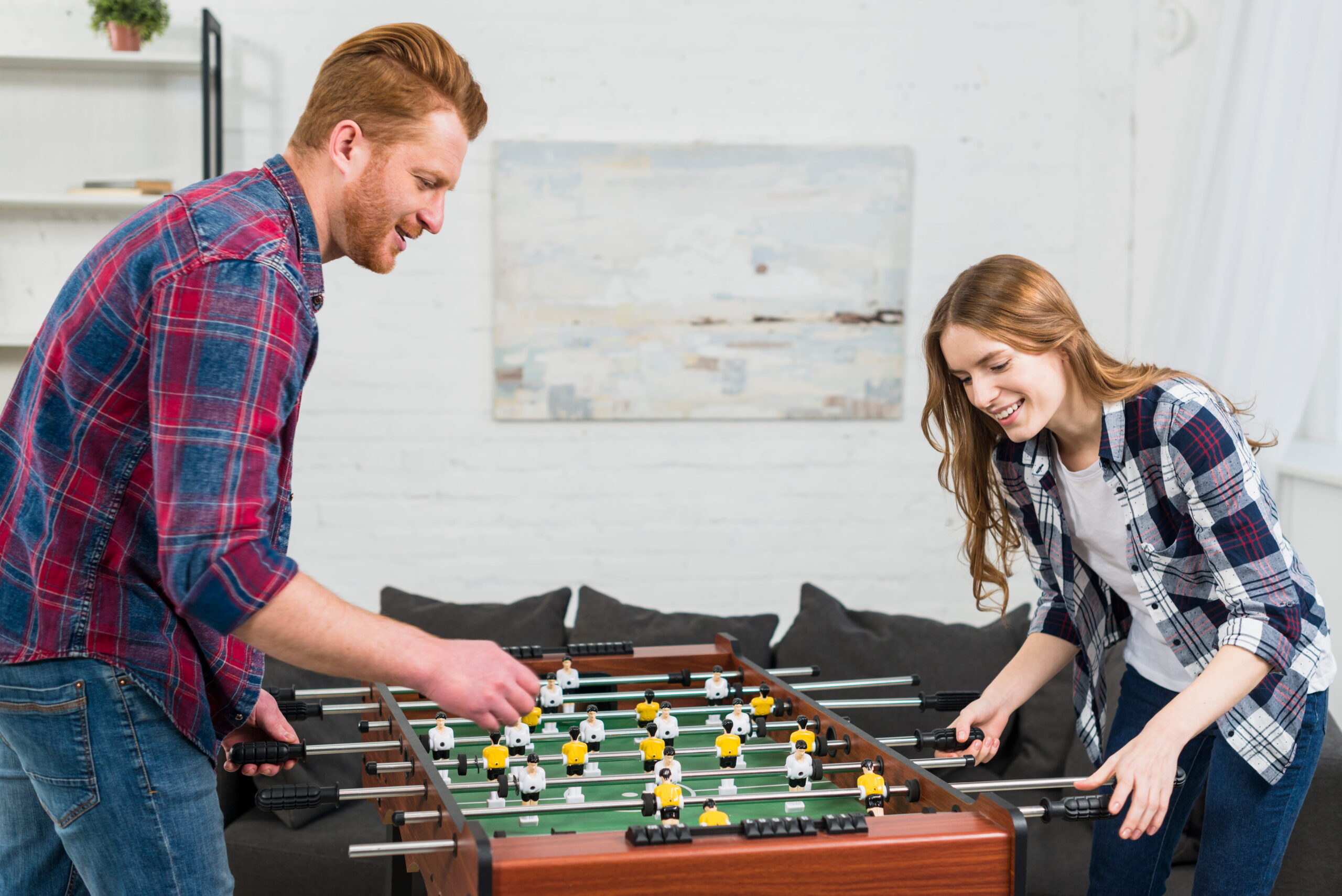
Sport foosball, also known as table soccer or simply foosball, is played on a specialized table where participants control miniature figures attached to rotating rods. The objective remains simple: maneuver a small ball into your opponent’s goal while defending your own. This game can be enjoyed solo, in doubles, or even with teams, making it versatile for family gatherings, office breaks, or professional events.
Tables typically measure about 56 inches long, 30 inches wide, and 36 inches high, with eight rods controlling rows of players. Each side has a goalkeeper, defenders, midfielders, and attackers, just like in real soccer. The ball, often made of cork or plastic for optimal grip and speed, bounces around the field as players twist and slide the rods. Matches are fast-paced, demanding hand-eye coordination and split-second decisions.
What sets sport foosball apart from other tabletop games is its competitive edge. Recognized by organizations like the International Table Soccer Federation (ITSF), it has evolved from a leisure activity into a structured sport with global tournaments. Beginners appreciate its accessibility—no need for vast fields or expensive gear—while pros hone advanced techniques like the “snake shot” for powerful goals.
History of Sport Foosball
The roots of sport foosball trace back to Europe in the late 19th and early 20th centuries. Patents for similar games appeared as early as the 1890s, but the modern version is credited to Harold Searles Thornton, who patented it in the UK in 1921. Inspired by a box of matches laid across a table to simulate soccer players, Thornton created a prototype that captured the essence of association football on a mini scale.
Around the same time, in France, Lucien Rosengart developed “babyfoot” during the 1930s to entertain his grandchildren during winter. Meanwhile, Alejandro Finisterre patented “futbolín” in Spain in 1937, influenced by his experiences during the Spanish Civil War. These innovations spread across Europe, with variations in table design and rules.
Sport foosball reached the United States in the 1950s, imported by Lawrence Patterson. It exploded in popularity during the 1970s, becoming a staple in bars, arcades, and homes. The name “foosball” derives from the German “tischfußball,” meaning table football. By the 2000s, the ITSF was formed in France to standardize rules and promote international competitions, elevating it from a pub pastime to a legitimate sport.
Today, brands like Tornado, Bonzini, and Garlando dominate the market, with tables used in official events. The sport’s history reflects cultural adaptations—sloped corners in American models for faster play, flat ones in European styles for control. This evolution has kept sport foosball relevant, blending tradition with modern competitive spirit.
Rules of Sport Foosball
Understanding the rules ensures fair and enjoyable play in sport foosball. Games start with a coin toss to decide who serves first. The ball is dropped through a side hole, and players must wait until it touches a figure before moving.
Basic Setup and Gameplay
Each player controls four rods: one for the goalkeeper (1-3 figures), defense (2 figures), midfield (5 figures), and attack (3 figures). Rods can be rotated up to 360 degrees but not spun excessively—a rule enforced to prevent unfair advantages. The ball must be in motion; if it stops unreachable, it’s a “dead ball” and restarted.
Scoring and Winning
A goal is scored when the ball enters the opponent’s net. Matches often go to 5, 7, or 11 points, with a two-point lead required in some formats. In doubles, partners alternate controlling rods for offense and defense. Time limits may apply in tournaments, typically 13-15 minutes per game.
Prohibited Moves
Spinning the rod more than 360 degrees without hitting the ball is illegal, as is jarring the table or distracting opponents. In ITSF-sanctioned events, rules are strictly unified, but casual play allows flexibility. Penalties might result in free shots or point deductions.
These guidelines keep sport foosball strategic rather than chaotic. Practice sessions help players internalize them, turning novices into skilled competitors.
Choosing the Right Foosball Table
Selecting a foosball table is crucial for enhancing your sport foosball experience. Entry-level models, like the GoSports or EastPoint Sports, suit beginners with sturdy builds and affordable prices around $100-$300. They feature wooden cabinets and basic rods for casual fun.
For serious players, professional-grade tables from Tornado or Bonzini offer durability with features like adjustable legs, counterbalanced men, and laminated playfields. These cost $500-$2,000 but provide smooth gameplay and longevity. Outdoor versions, made with weather-resistant materials, extend the sport to patios.
Consider size—standard for adults, mini for kids—and extras like scorekeepers or cup holders. Secondary factors include rod type (hollow for speed, solid for control) and ball return systems. Researching user reviews ensures you pick a table that matches your skill level and space.
Tips to Improve Your Sport Foosball Game
Mastering sport foosball requires practice and technique. Start with a relaxed grip to avoid fatigue; tense hands slow reactions. Focus on ball control—pin it under a figure to plan passes.
Offensive Strategies
Learn shots like the pull shot (pulling the rod toward you for power) or push shot (pushing away). The snake shot, involving wrist flicks, delivers speed but needs precision. Pass between rods to outmaneuver defenses.
Defensive Tactics
Block angles by aligning figures. Use the goalkeeper rod actively to cover gaps. In doubles, communicate with your partner for seamless switches.
Vary your pace—mix quick strikes with deliberate setups. Watch pros on YouTube for inspiration. Regular play builds muscle memory, turning average games into victories.
Professional Competitions in Sport Foosball
Sport foosball boasts a vibrant competitive scene. The ITSF World Cup and Championships attract hundreds from over 30 countries, with events in singles, doubles, and teams. Prizes can reach thousands, and top players like those from Germany or the US dominate rankings.
Tournaments emphasize skill over luck, with live streams drawing viewers. The sport’s push for Olympic inclusion highlights its growth. Local leagues, often in bars or clubs, serve as entry points for aspiring pros.
Benefits of Playing Sport Foosball
Beyond fun, sport foosball offers health perks. It sharpens hand-eye coordination and reflexes, similar to video games but with physical engagement. Socially, it fosters teamwork and friendly rivalry.
Mentally, strategic planning reduces stress. Physically, it provides light exercise, burning calories during intense matches. Accessible to all ages, it’s inclusive, even for those with mobility issues. Studies suggest such games boost cognitive function, making it a smart recreational choice.
In workplaces, foosball tables encourage breaks that enhance productivity. Families bond over games, creating lasting memories. Overall, sport foosball enriches life through play and connection.
FAQs
What is the difference between foosball and table soccer?
Foosball and table soccer refer to the same game; “foosball” is the common North American term, while “table soccer” is more universal. Both describe sport foosball’s rod-controlled gameplay.
How many players are needed for sport foosball?
It can be played with 2-4 players. Singles involve one per side controlling all rods, doubles pair up for offense/defense, and teams of four add strategy.
Is sport foosball an Olympic sport?
Not yet, but the ITSF has observer status with international sports bodies, working toward recognition. It features in global competitions like the World Cup.
What makes a good foosball table for beginners?
Look for stable construction, smooth rods, and adjustable height. Brands like Tornado Sport offer reliable entry models under $500.
Can children play sport foosball?
Yes, with mini tables or adjustable ones. It teaches coordination and sportsmanship, making it family-friendly.