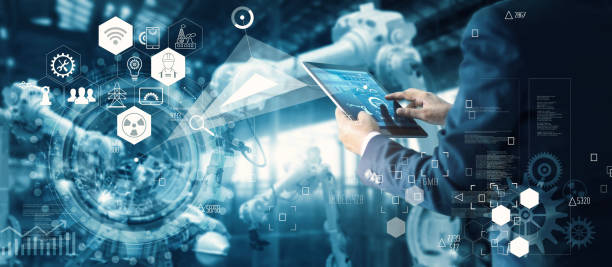
Intelligent Systems represent a cornerstone of modern artificial intelligence, enabling machines to perceive, reason, and act in ways that mimic human cognition. These systems process vast amounts of data, learn from experiences, and make decisions autonomously, transforming industries from healthcare to finance. In this article, we delve into the fundamentals of Intelligent Systems, exploring their components, real-world applications, and future potential.
What Are Intelligent Systems?
thes are advanced technologies designed to replicate human-like intelligence through algorithms and data processing. Machines equipped with these systems can analyze environments, solve problems, and adapt over time. Unlike traditional software, which follows rigid instructions, the incorporate learning mechanisms to improve performance.
The concept traces back to early AI research in the 1950s, but recent advancements in computing power have accelerated their development. Today,the power everything from voice assistants to self-driving cars. They rely on interdisciplinary fields like computer science, neuroscience, and engineering to create responsive, efficient solutions.
Experts define as entities that gather information from sensors or data sources, process it using sophisticated models, and output actions or insights. This process often involves feedback loops where the system refines its approach based on outcomes. For instance, a recommendation engine on a streaming platform learns user preferences to suggest content.
Core Components of Intelligent Systems
they comprise several interconnected elements that enable their functionality. Each component plays a crucial role in perception, decision-making, and execution.
Machine Learning
Machine learning forms the backbone of many Intelligent Systems. Algorithms train on datasets to identify patterns and make predictions. Supervised learning, where models learn from labeled data, is commonly used for classification tasks like spam detection. Unsupervised learning discovers hidden structures in unlabeled data, aiding in clustering applications such as customer segmentation.
Deep learning, a subset involving neural networks, excels in handling complex data like images and speech. Neural networks mimic the human brain’s structure, allowing systems to recognize objects in photos or transcribe audio accurately. Reinforcement learning, where agents learn through trial and error, is applied in robotics for optimizing movements.
Natural Language Processing
Natural language processing (NLP) enables Intelligent Systems to understand and generate human language. Techniques like tokenization break down text into manageable parts, while sentiment analysis gauges emotions in reviews. Machine translation tools, such as those powering real-time language conversion, rely on NLP models trained on multilingual corpora.
Chatbots and virtual assistants use NLP to interpret queries and provide relevant responses. Advanced models incorporate context awareness, improving conversation flow. This component bridges the gap between human communication and machine efficiency.
Perception and Sensing
Perception involves acquiring and interpreting sensory data. Computer vision processes visual inputs through cameras, enabling facial recognition or autonomous navigation. Speech recognition converts audio waves into text, as seen in smart home devices.
Sensor integration combines data from multiple sources, like GPS and accelerometers in drones, for precise environmental mapping. These capabilities allow to interact with the physical world effectively.
Reasoning and Problem-Solving
Reasoning mechanisms in Intelligent Systems include deductive, inductive, and abductive approaches. Deductive reasoning applies general rules to specific cases, such as diagnosing diseases from symptoms. Inductive reasoning generalizes from observations, useful in trend prediction.
Problem-solving employs algorithms like search trees or heuristics to find optimal solutions. Expert systems, which encode domain-specific knowledge, assist in fields like legal advice or medical diagnostics. Optimization techniques minimize costs or maximize efficiency in logistics.
Robotics and Execution
Robotics integrates Intelligent Systems into physical embodiments. Autonomous robots use AI to perform tasks in manufacturing or exploration. Actuators and controllers execute decisions based on processed data, ensuring precise movements.
Human-robot interaction focuses on safe collaboration, with systems adapting to user behaviors. This component extends Intelligent Systems beyond software into tangible applications.
Human Intelligence vs. Machine Intelligence
Human intelligence excels in creativity, empathy, and adaptability to novel situations. Machines, however, surpass humans in speed, accuracy, and handling large-scale data. A comparison reveals strengths: humans interpret nuance intuitively, while Intelligent Systems process petabytes of information without fatigue.
Ethical considerations arise when machines mimic human traits. Bias in training data can lead to unfair outcomes, necessitating diverse datasets and transparent algorithms.
Applications of Intelligent Systems
Intelligent Systems find applications across diverse sectors, driving innovation and efficiency.
In healthcare, diagnostic tools analyze medical images to detect anomalies early. Predictive analytics forecast disease outbreaks, aiding resource allocation. Personalized medicine tailors treatments based on genetic data.
The automotive industry employs Intelligent Systems in autonomous vehicles. Sensors detect obstacles, while AI navigates routes safely. Advanced driver-assistance systems reduce accidents through real-time alerts.
Finance leverages these systems for fraud detection, where anomalies in transaction patterns trigger investigations. Algorithmic trading executes high-frequency trades based on market data analysis.
Retail uses recommendation engines to enhance customer experiences. Inventory management systems predict demand, optimizing stock levels.
Manufacturing benefits from predictive maintenance, where sensors monitor equipment health to prevent breakdowns. Smart factories automate production lines, improving throughput.
Education platforms adapt content to learner needs, providing customized tutoring. Intelligent Systems assess progress and suggest improvements.
Challenges and Ethical Considerations
Despite advantages, Intelligent Systems face hurdles. Data privacy concerns require robust security measures. Job displacement from automation calls for reskilling programs.
Ethical AI development emphasizes fairness, accountability, and transparency. Regulations like GDPR guide responsible implementation.
Future Trends in Intelligent Systems
The future of Intelligent Systems lies in greater autonomy and integration. Edge computing processes data locally, reducing latency for real-time applications. Hybrid systems combining symbolic AI with neural networks promise more robust reasoning.
Advancements in quantum computing could accelerate complex simulations. Ethical AI frameworks will evolve to address societal impacts.
Integration with IoT expands capabilities, creating smart cities that optimize traffic and energy use. Research focuses on explainable AI, making decisions interpretable to users.
Conclusion
Intelligent Systems continue to evolve, reshaping how we interact with technology. By harnessing AI’s power, these systems solve complex challenges and open new possibilities. As adoption grows, balancing innovation with ethics remains key to sustainable progress.
FAQs
What distinguishes Intelligent Systems from traditional AI?
Intelligent Systems emphasize adaptive learning and decision-making, going beyond rule-based AI to incorporate real-time data processing and autonomy.
How do Intelligent Systems impact daily life?
They power smart devices, personalized recommendations, and automated services, making routines more efficient and convenient.
Are there risks associated with Intelligent Systems?
Yes, potential risks include data breaches, algorithmic bias, and over-reliance on technology, which can be mitigated through ethical design and regulations.
What skills are needed to work with Intelligent Systems?
Proficiency in programming, data science, machine learning, and domain knowledge is essential for developing and deploying these systems.
How will Intelligent Systems evolve in the next decade?
Expect advancements in integration with emerging technologies like 5G and blockchain, leading to more interconnected and intelligent ecosystems.