Introduction
Golf sports terms form the backbone of understanding this timeless game, whether you’re a beginner stepping onto the course for the first time or a seasoned player refining your strategy. Mastering these terms not only helps you communicate effectively with fellow golfers but also deepens your appreciation for the nuances of play. In this guide, we’ll break down essential golf sports terms into clear categories, providing definitions, examples, and insights to elevate your knowledge.
What Are Golf Sports Terms?
Golf sports terms encompass a wide array of vocabulary unique to the sport. Players use them to describe shots, scores, equipment, and course features. These terms have evolved over centuries, blending Scottish origins with modern slang. For instance, knowing the difference between a “birdie” and a “bogey” can transform how you track your performance. Golf’s lingo promotes precision and camaraderie on the links.
The sport demands familiarity with these phrases to avoid confusion during rounds. Caddies often relay advice using specific jargon, and announcers on TV sprinkle commentary with terms like “fairway” or “bunker.” By learning them, you gain confidence and enjoy the game more fully.
Scoring Terms in Golf
Scoring lies at the heart of golf, and these terms define success or struggle on each hole.
Par, Birdie, and Eagle
Par represents the standard number of strokes expected to complete a hole. Most holes are par-3, par-4, or par-5 based on distance. A birdie occurs when you finish one stroke under par, like holing out in three on a par-4. Eagles, rarer still, mean two under par—think a hole-in-one on a par-3 or reaching a par-5 in three shots.
Professional golfers like Rory McIlroy often rack up eagles on longer holes. Amateurs celebrate them as highlights.
Bogey, Double Bogey, and Beyond
A bogey happens with one stroke over par, such as five on a par-4. Double bogeys add two extra strokes, and triples go three over. These terms track mistakes, helping players analyze rounds. In match play, avoiding bogeys can secure victories.
Higher scores earn nicknames: a “snowman” for an eight, resembling the figure’s shape. Such slang lightens the mood after tough holes.
Course Features and Layout Terms
The golf course itself introduces terms that describe its challenging landscape.
Tee Box, Fairway, and Rough
The tee box marks the starting point, where players “tee off” their first shot. Fairways offer mowed grass for ideal lies, while the rough—taller grass bordering them—punishes errant drives. Navigating from rough demands stronger clubs and adjusted swings.
Courses like Augusta National feature punishing rough during majors, testing pros’ accuracy.
Green, Bunker, and Hazard
Greens are the putting surfaces around the hole, kept smooth for rolling putts. Bunkers, or sand traps, guard them, requiring specialized shots to escape. Hazards include water bodies or out-of-bounds areas, often marked by stakes.
Penalties apply for balls in hazards, adding strategy. Terms like “fried egg” describe a buried lie in sand, making recovery tricky.
Equipment-Related Golf Terms
Clubs and gear come with their own set of terms essential for selection and use.
Driver, Irons, and Wedges
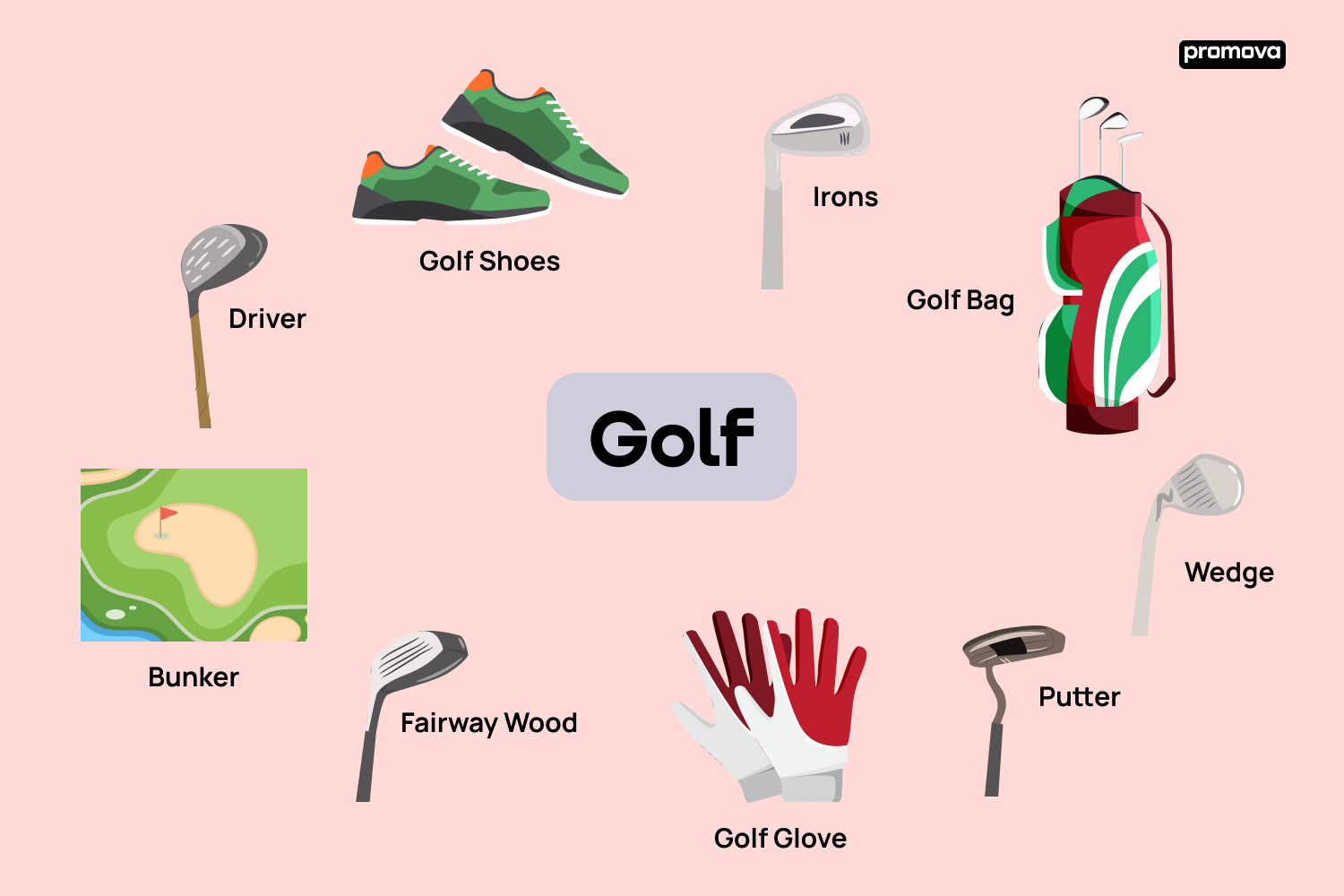
The driver, a long-shafted club, launches tee shots far. Irons, numbered from 1 to 9, handle approach shots with varying lofts. Wedges—pitching, sand, lob—excel in short game scenarios, like chipping over obstacles.
Hybrids blend iron and wood traits for versatility. Understanding lofts helps match clubs to distances.
Putter and Ball Terms
Putters roll the ball on greens with flat faces for control. Terms like “sweet spot” refer to the club’s optimal striking area. Golf balls feature dimples for aerodynamics, and “compression” describes their firmness.
Players like Tiger Woods swear by specific putters for feel, influencing major wins.
Shot Types and Technique Terms
Describing how the ball flies involves these dynamic terms.
Drive, Chip, and Putt
A drive is the powerful opening shot, aiming for distance. Chips are low, short shots near the green, while putts roll along the surface to the hole. Mastering these builds a complete game.
Techniques vary: a “flop shot” lofts high over bunkers, demanding open clubfaces.
Slice, Hook, and Fade
Slices curve right (for right-handers) due to open faces, while hooks bend left from closed ones. Fades and draws are controlled versions, used strategically. Terms like “shank” denote mishits off the hosel, sending balls sideways.
Pros shape shots to navigate doglegs—bends in fairways.
Golf Formats and Rules Terms
Different ways to play introduce varied terminology.
Stroke Play vs. Match Play
Stroke play counts total strokes over 18 holes, common in tournaments. Match play pits players hole-by-hole, where winning more holes claims victory. Terms like “all square” mean tied matches.
Formats like scramble allow teams to pick best shots, ideal for fun outings.
Handicap and Mulligan
Handicaps level fields by subtracting strokes based on skill. A mulligan is an informal redo, not allowed in official play but common casually.
Rules terms include “fore” as a warning shout for wayward shots, preventing accidents.
Slang and Fun Golf Phrases
Golf’s casual side shines through slang, adding personality.
Yips, Gimme, and Mulligan
Yips describe nervous putting twitches, plaguing even pros. Gimmes are conceded short putts in friendly games. Mulligans, as mentioned, offer second chances.
Phrases like “dance floor” refer to the green, while “jungle” means deep rough.
Other Colorful Terms
A “banana ball” is a severe slice, curving like the fruit. “Chili dip” means chunking chips, digging too deep. These lighten frustrations, fostering banter in groups.
Terms evolve, with “Texas wedge” meaning putting from off the green in firm conditions.
Golf sports terms enrich the experience, turning a simple walk into a strategic adventure. By incorporating them, you connect deeper with the sport’s heritage and community. Practice on the course, and soon they’ll roll off your tongue naturally.
FAQs
What is the most common golf sports term for a score one under par?
A birdie is scored when a player completes a hole in one stroke fewer than par. This term celebrates skillful play and appears frequently in tournament coverage.
How do golf sports terms like bunker differ from hazard?
Bunkers are sand-filled depressions, while hazards broadly include water or penalty areas. Balls in bunkers can be played without penalty strokes, unlike some hazards.
Why are golf sports terms important for beginners?
These terms help beginners understand instructions, scorecards, and conversations. They build confidence and prevent misunderstandings during rounds or lessons.
What does ‘fore’ mean in golf sports terms?
‘Fore’ is shouted to alert others of an errant shot heading their way. It’s a safety term derived from artillery warnings, essential for etiquette.
Are there golf sports terms specific to equipment?
Yes, terms like loft (clubface angle) and grip (hand placement) relate to gear. Knowing them aids in selecting clubs suited to your swing style